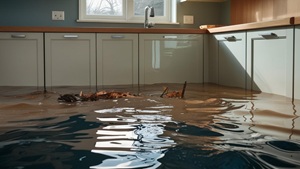
 Floods cause tens of thousands of pounds damage to homes
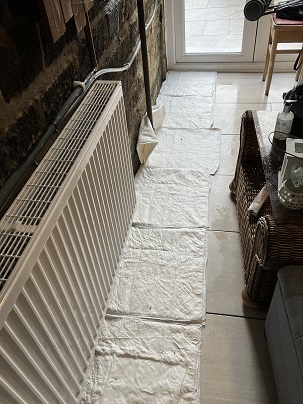 FloodSax in their dry state soaking up an internal leak to prevent water damage
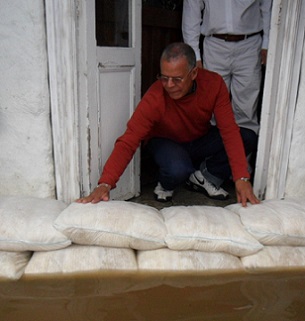 FloodSax keeping contaminated floodwater out of a home
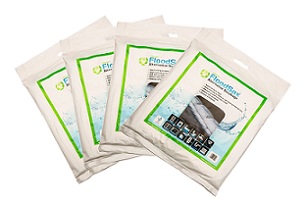 FloodSax come in handy packs of 5 ideal for space-saving storage
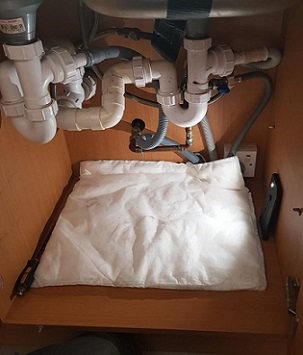 FloodSax are perfect to deal with internal escapes of water
More than 10% of new homes now at risk of flooding in England which is why they all need FloodSax
One in nine homes built between 2022 and 2024 are at risk of flooding, a major insurance company has revealed.
Aviva says that 11% of homes constructed in England during these two years are in areas of medium or high risk of flooding.
The statistics combine new homes data with the Environment Agency’s latest assessment of flood risk at local levels and shows there is a worrying upward trend of new homes being built in high-risk flooding areas in recent years.
The data reveals that out of the 396,602 new homes recorded by the Ordnance Survey in England between 2022 and 2024, 43,937 are in areas of medium or high risk of flooding and more than a quarter (26%), equivalent to 101,657 new homes, have some risk of flooding.
Previous analysis from Aviva, based on government statistics, found that 8% of new homes were built in flood risk zones between 2013 and 2022. Comparable figures have not been published since 2022 but this new study suggests the number of homes built in flood risk areas has accelerated as house building increases.
Also deeply concerning is the fact that homes built since 2009 are excluded from the Flood Re reinsurance scheme which was set up in 2016 to improve the affordability and accessibility of flood insurance to properties in high-risk areas.
Jason Storah, Aviva chief executive for general insurance in the UK and Ireland, said: “Too many new homes have been built in higher risk areas. It’s particularly worrying that this trend has risen in recent years, just as house building accelerates.
“Importantly, these homes are not protected by the Flood Re scheme which excludes homes built after 2009 to prevent more new homes being put at risk. Sadly, as the study shows, this simply hasn’t happened.”
Aviva’s Building Future Communities Report published in October 2025, found that every constituency in Great Britain is projected to have increased flood risk (river, coastal or surface water) in the future. In England alone, 69% of constituencies are projected to see an increase of more than 25% in the number of properties facing flood risk by mid-century.
Which areas of England are most at risk of new homes flooding?
Almost a third of the top constituencies with the highest number of new homes built in medium or high-risk areas are in Greater London and Essex.
Constituencies in Lincolnshire, the north west and western regions also include high numbers of new build homes at risk. While it may be more difficult to prevent new housing developments in some areas which are naturally more prone to flooding and have less land available for development, it’s even more important that these homes are protected by property flood resilience measures.
|
Region |
% of constituencies with new homes built in medium or high-risk flooding areas |
|
Greater London/Essex |
32% |
|
Lincs/E Yorks |
13% |
|
North West |
13% |
|
West |
13% |
|
South East |
12% |
|
Yorks/NE |
7% |
|
East Midlands |
5% |
|
West Midlands |
3% |
|
East |
2% |
How FloodSax can save homeowners a fortune in flooding costs
One very inexpensive way to deal with flooding and escapes of water is to have a box of 20 FloodSax alternative sandbags so homeowners are ready for anything 24 hours a day and 365 days a year.
Once FloodSax are fully immersed in water, a gelling polymer inside absorbs and retains it to expand to become an instant sandless sandbag. Several can then be used to build a protective barrier outside to prevent water getting into the home or divert it down drains.
FloodSax are unique in that they are the only alternative sandbag that can work indoors too, making it incredibly flexible and multi-functional.
In their dry state FloodSax are very flat with a large surface area so the gelling polymer can soak up escapes of water, drips, leaks and internal floods even in the most inaccessible places such as beneath floorboards as well as underneath sinks, pipes, radiators and boilers.
FloodSax were devised by Environmental Defence Systems Ltd based in Huddersfield, West Yorkshire.
Director Lucy Bailey said: “The amount of money insurance companies have to pay out for flooding claims dwarfs all over claims and now stands at a staggering £6bn a year.
“That’s why flooding is known as ‘the thief who takes everything’ as it wrecks all it touches from floors to walls and electrics yet all this misery and trauma can be avoided simply by having FloodSax which can be instantly in action to tackle floods and escapes of water.’’
According to the Association of British Insurers: “The smallest of leaks can quickly become a torrent and cause some very expensive and disruptive damage.”
The average insurance claim after a flood in a house is £31,000 and just an inch of water can quickly rack up a £20,000 repair bill.
FloodSax pay for themselves as they are way cheaper than flooding insurance excesses
On top of that, many people don’t realise that their insurance policies have a separate excess for flooding which is far higher than their general excess.
These days the flooding excess can be £500 for many policies.
Lucy added: “I hate to mention the phrase ‘small print’ but look carefully at your insurance policy and you’ll soon discover that on the vast majority there are two excesses – one for general insurance and a separate one for flooding and escapes of water.
“Prepare to be shocked when you see what yours is as many have doubled in recent years.
“The cost of a box of FloodSax is only a fraction of the cost of your excess, let alone the many thousands of pounds damage that flooding will cause.’’
To buy FloodSax online or find your nearest stockist go to https://www.floodsax.co.uk/buy/uk-suppliers/